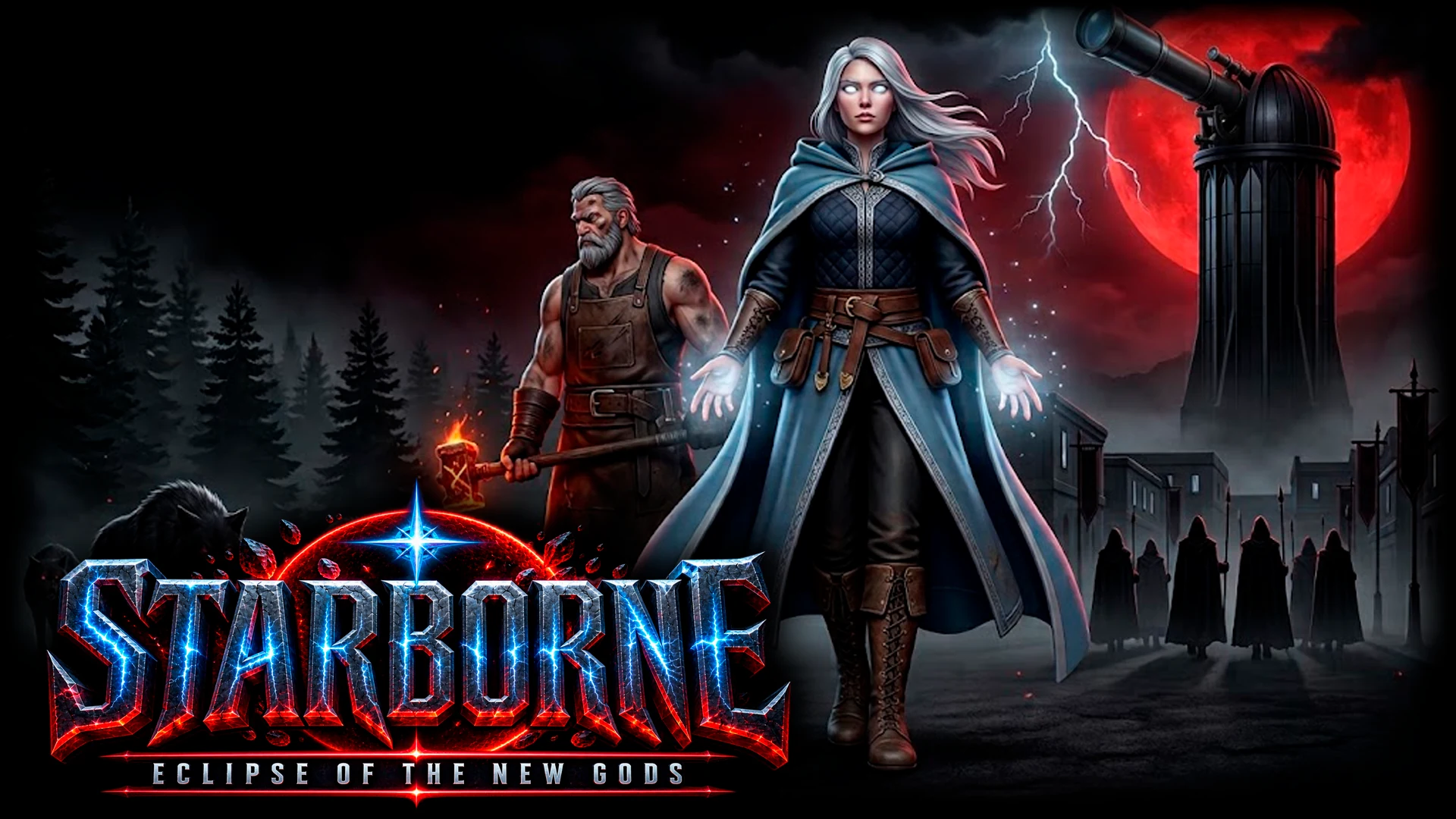
Aethel and the Veil
Starborne takes place in Aethel, a world that has always lived next to something it would rather not see. The Veil is a thin membrane between Aethel and the Umbral, a dimension of living darkness. For most of history the Veil simply held. People knew it was there the way you know the sea is there at night: a cold presence on the other side of a line you do not cross.
The Veil is not described as a wall. In the novel it reads as thin mouths in the air, slits of possibility, and where it has been broken you find a black slab veined like a still ocean. When you see black glass in Starborne, that is what you are looking at: the Veil's wound, hardened into something you can touch.
The Tear
Generations before the story begins, the Ministry of Concordia decided that the darkness on the far side of the Veil could be used. Their belief was simple and terrible: controlled darkness would bring order, and order would bring peace. At the Black Glass Observatory they drove a sliver of black glass into the Veil. It tore.
That wound is the Tear, and nothing in Aethel has been right since. Shadow bleeds through it into the world, a little at all times, and violently when the Veil thins. The Observatory still stands over it, and the road to it is the road the whole adventure is walking.
The Blood Moon
The Veil thins under the Blood Moon, and when it does, the Umbral pours out. It is the hinge of Starborne's rhythm. By day the valley is quiet and watchful, and fights are rare. When the Blood Moon rises, the dark comes in force, doors are barred, and anything still outside is in danger. Corrupted creatures show it in their eyes, which glow red only when they are charged by the Veil: under a Blood Moon, or near the Tear.
What shadow does to the living
Shadow does not only summon monsters. It seeps into living things and reshapes them. Canon sorts the results into three kinds.
| Kind | What it was | What it became |
|---|---|---|
| Shadowfauna | Ordinary animals: wolves, crows, bears | Stretched, eyeless predators |
| Shadow-Husks | People | Hollow shells whose old role lingers. A husk miner still swings a pick. |
| Veil-Horrors | Nothing earthly | Pure umbral things: crawling geometry, maws, watchers |
The marks of corruption are consistent, which helps when you are reading the world: cracks of black glass, flesh that looks like smoke, and red eyes when the Veil is strong.
Magic: blood, nails, counting and ash
Magic in Starborne is not fireballs and mana bars. It is ritual, and it has a cost. It runs on blood, nails, counting and ash. A smith who knows the old ways works black-iron nails, ash, heartwood and water, and speaks over the work. Numbers matter: twelve, three, nine and eleven recur in the story and are never there by accident.
The same tools serve both sides. The Ministry's way into the Veil is a ritual too: a knife, five drops of blood, chalk and ash, a lens, and a ledger. The difference is what the ritual is for. The heroes count to hold the dark back. The Ministry counts to take.
The takings
The Ministry does not burn villages. It audits them. Its people cross a village like auditors, counting the bowls, the chairs and the doors. They bind the shrine's bell-ropes in hair and salt. They carve a sigil into the stone: a square with a line through it. Then the village is taken.
What a taking leaves behind is the core image of Starborne's horror. The fires are still burning. The doors stand open. There are no tracks and no voices. Nothing is broken, and nobody is there. When you come across a square-and-line mark chalked on a stone, you are standing somewhere the count has already passed through.
The factions
| Faction | Who they are | What they want |
|---|---|---|
| The Ministry of Concordia | Dark-robed bureaucrats and zealots, the auditors of the takings. They harvest umbral essence and guard the road to the Observatory. | Order through controlled darkness. The Tear used, not closed. |
| The Hearth | Scattered survivors: smiths, hedge-mages, farmers. Gideon and Lyra belong here. | The Tear sealed, not used. |
| The Veil-touched | Hermits, glasswrights and grey-market folk who trade in umbral trinkets. | To get by. Not evil, just surviving, and a source of hard choices. |
The Ministry is not a single villain in a tower. It has named agents who turn up again and again across the regions, and its own people run all the way from clerks with ledgers to armed enforcers. At its head, in the Observatory, is Alex, who is covered in Characters.
The eclipse and the new gods
The novel is called Eclipse of the New Gods, and the title is literal. Above the Black Glass Observatory hangs an eclipse that does not end. Inside, an orrery of black glass and cold brass models a sky that is wrong: one sun, eclipsed forever, and twelve dead worlds where the living ones should be.
The New Gods are bound up with the Tear itself. The causeway to the Observatory is a single span of black glass, poured on the day the New Gods first looked through the Tear, and it remembers being looked at.
Who or what those gods truly are, and what waits on the far side of the Veil, is a thread that runs past Volume I. Starborne's first story is about the near side: a valley, a family, and the people trying to keep the count from reaching them.
How the story can end
The journey ends beneath the Tear, at the Observatory, in a duel with the one who opened it. After that duel comes a choice: seal the Tear, or claim it. The choice is meant to be foreshadowed by smaller ones made all along the road, such as whether you pay in blood when it is offered, whether you show mercy, and whether you restore the names that were taken. The road itself is laid out in The twelve regions.