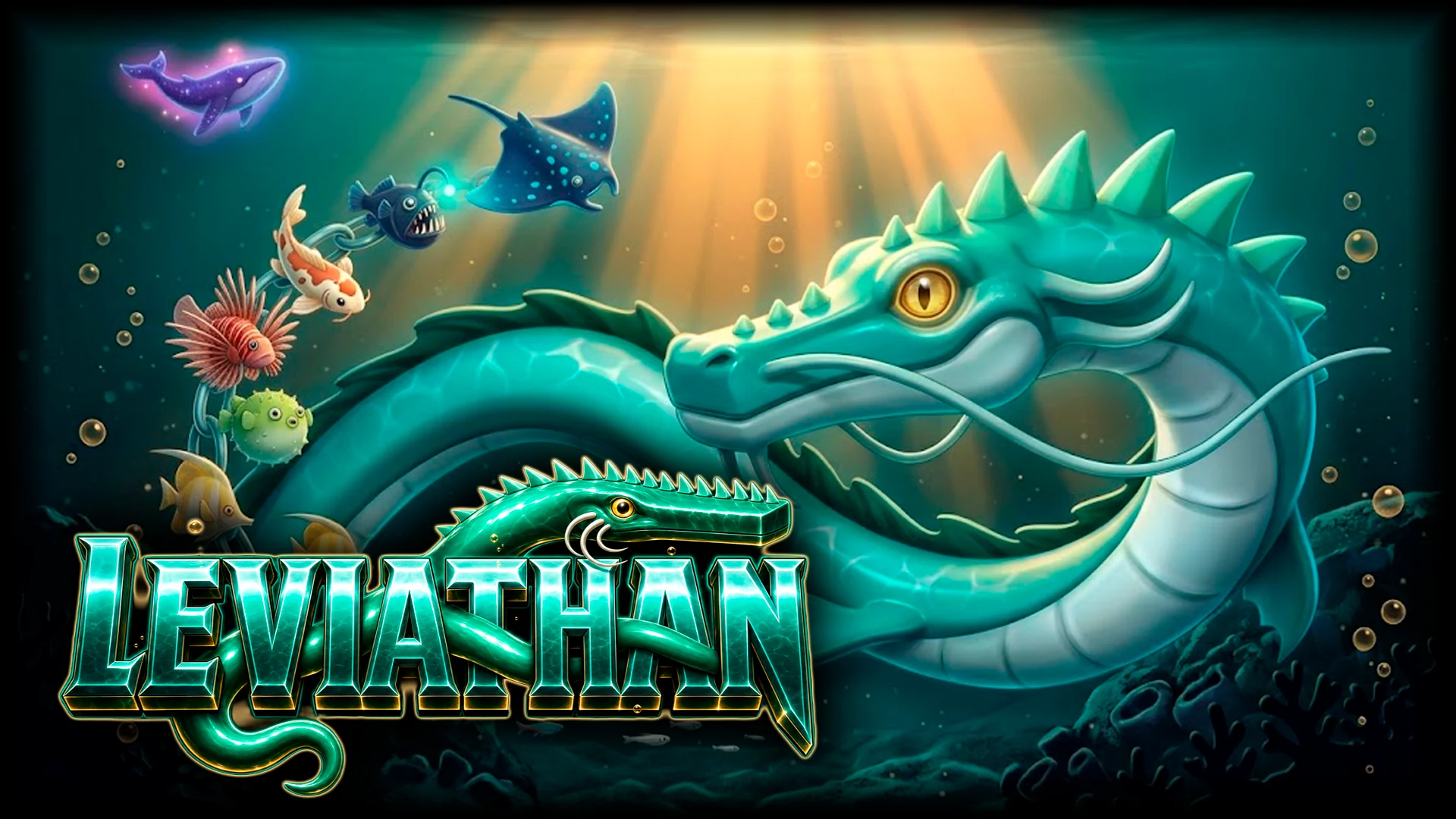
Eleven species, one ladder
Every fish in the reef belongs to one of eleven species. Two of the same species merge into the next one up, and that is the only way to climb: there is no shortcut past a rung except the eggs in the Reef Shop, which hatch mid-ladder fish. The chain ends at the Cosmic Whale, which cannot merge any further.
Because each merge needs two of the previous species, the cost doubles at every step. The table counts that cost in Fry: a Leviathan is worth 512 Fry, and the Cosmic Whale 1,024.
| # | Species | Size (radius) | Pearls when bred | Idle pearls per second | Worth in Fry |
|---|---|---|---|---|---|
| 1 | Fry | 16 | none (cannot be bred) | 0.14 | 1 |
| 2 | Neon Tetra | 21 | 6 | 0.28 | 2 |
| 3 | Clownfish | 27 | 12 | 0.42 | 4 |
| 4 | Angelfish | 34 | 20 | 0.56 | 8 |
| 5 | Pufferfish | 43 | 30 | 0.70 | 16 |
| 6 | Lionfish | 54 | 42 | 0.84 | 32 |
| 7 | Koi Dragon | 67 | 56 | 0.98 | 64 |
| 8 | Anglerfish | 83 | 72 | 1.12 | 128 |
| 9 | Manta Ray | 102 | 90 | 1.26 | 256 |
| 10 | Leviathan | 126 | 110 | 1.40 | 512 |
| 11 | Cosmic Whale | 155 | 132, plus 500 for the first | 1.54 | 1,024 |
Sizes are in the game's own units on a tank 760 units tall, so a Cosmic Whale spans about two fifths of the tank's height. "Pearls when bred" is the base payout for the merge that creates that species, before any combo or bloodline bonus; merging and scoring covers the multipliers. Idle pearls are doubled for any fish that carries a bloodline.
Where new fish come from
- Your drops. The next fish is drawn from the bottom four species only: Fry 40% of the time, Neon Tetra 30%, Clownfish 20% and Angelfish 10%. You can never drop anything bigger.
- Free Fry. While the tank has room, a Fry drifts in from the top every 2.6 to 4.4 seconds on its own.
- Eggs. The Reef Egg hatches a Clownfish, Angelfish or Pufferfish. The Abyssal Egg hatches a Pufferfish (80%) or a Lionfish (20%).
- Devolving. When the Spikefish strikes an Anglerfish or a Manta Ray, it drops back one species instead of dying. See threats.
How each species behaves
Every fish has a species temperament plus its own personality: boldness, sociability, energy, curiosity and vigilance are rolled per fish, so two Clownfish never swim quite alike. Bigger species are slower in general.
| Species | Temperament | Eats |
|---|---|---|
| Fry | Nervous shoaler; groups with other Fry | Nothing |
| Neon Tetra | The fastest small fish; darts in shoals | Nothing |
| Clownfish | Homebody; picks a spot and keeps returning to it | Nothing |
| Angelfish | Graceful drifter that prefers the upper middle of the tank | Fry |
| Pufferfish | Slow, with a sudden dart at more than twice its speed every few seconds | Fry, Neon Tetra |
| Lionfish | The first strong hunter, with a high drive to chase | Fry to Clownfish |
| Koi Dragon | Circles in loops | Fry to Angelfish |
| Anglerfish | Lurks low; lunges at almost double speed when prey is close | Fry to Pufferfish |
| Manta Ray | Sweeps wide across the lower tank and chases hard | Fry to Lionfish only |
| Leviathan | Serpentine apex hunter with the strongest chase drive | Fry to Lionfish only |
| Cosmic Whale | Slow drift high in the water | Fry to Lionfish only |
The predation rule
The rule behind the "Eats" column is simple: a fish can eat any fish at least three species smaller than itself. The three giants are the exception: the Manta Ray, Leviathan and Cosmic Whale only ever eat the first six species, so a Koi Dragon or an Anglerfish is safe from them.
Predators do not eat nonstop. After a meal, most wait 8 seconds before eating again. The Anglerfish, built as an ambush lurker, recovers in as little as 1.5 seconds, and the three giants in 4. Each meal pays a few pearls (the predator's position on the ladder, minimum 2), which is far less than the prey was worth, so predation is mostly a loss you want to limit.
From the Angelfish up, predators actively hunt: they lock on to prey they can see, aim where it is heading and speed up while chasing. Smaller fish flee anything that can eat them, sprinting at about one and a half times their normal speed. The giants' active chase targets Neon Tetras through Lionfish; a Fry is only eaten if it bumps into one.
Two depths in one tank
The tank has a front layer and a back layer. Fish only touch, merge and eat within their own layer; back-layer fish are drawn slightly smaller and hazier. New fish are placed on a layer at random, with Fry and Neon Tetras leaning to the front and the three giants leaning to the back.
Fish switch layers on purpose: one that has spotted a merge partner crosses over to it, and a hunting predator crosses to its prey. So a twin on the other layer is not lost, it just needs to be seen. The Spikefish ignores layers entirely.
What this means as you climb
- Small fish are food from the Angelfish up. Once you have mid-ladder fish, every Fry and Tetra you drop is at risk until it merges.
- Koi Dragon and above are never eaten. The only fish big enough to eat a Koi Dragon are the giants, and they only eat the first six species. From the Koi Dragon up, the only danger left inside the tank is the Spikefish.
- Your first Lionfish is a turning point. It is the first species that eats your Clownfish, the most common mid-sized drop, so it changes how freely you should drop.
Ways to work with these rules are in strategy.